


In this blog I comment on the measures outlined in the Chancellor’s Autumn Statement on 23 November 2016.

The Chancellor of the Exchequer, Philip Hammond, has today announced a number of changes in his inaugural Autumn Statement to help improve the affordability of housing and rental homes, but how will these changes impact the property market in Lincolnshire?
The Home Building Fund aims to make houses more affordable for those people who “just about manage” but how much Lincolnshire will see of the allocated £3 billion is yet to be clarified; Lincolnshire can’t rely on funding boosts or hand-outs to resolve the problems arising with low housing stock, but has to be proactive in achieving its ambition to achieve 100,000 new homes by 2030.
Devolution still remains at the heart of local growth and I’m pleased to learn that £542 million will be shared with Local Enterprise Partnerships in the Midlands and East of England.
Both the private and public sector across Lincolnshire has a role to play in helping to boost inward investment into the area; our county is full of great opportunities for investment, which all helps to encourage property developers to the area who don’t need to rely on government grants to create new homes.
Of course, we shouldn’t look a gift horse in the mouth and any support from the Chancellor is welcomed with open arms, but it’s important to remember that existing public and private sector partnerships within Lincolnshire are already helping to drive inward investment into the region.
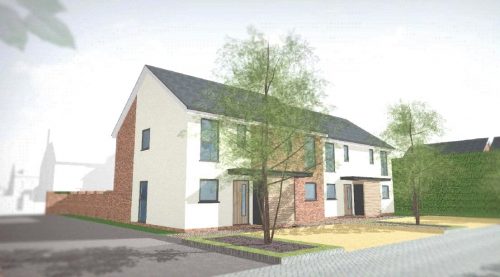 Anything which helps small builders and construction SMEs continue building is welcomed by Pygott & Crone. Cherry Paddocks, built by Pride Homes, has been one of our most successful village schemes which supported a local firm and its supply chain, further boosting Lincolnshire’s economy. An example of a 2 bedroom semi-detached house available at Cherry Paddocks is pictured right.
In terms of the government’s plans for a £2 billion loan to build 15,000 homes on public sector land, this is already being realised in Lincolnshire. Gainsborough has a number of public-sector owned sites which have already been earmarked for the development of new homes. The local council is working with a number of private-sector businesses to help drive inward investment into the town where differentiated housing will be building for first time and second time buyers.
I look forward to reading the Housing Whitepaper which will be published in due course.
For more company news and insights from Pygott & Crone, click here





Latest news

One third of properties need price reductions: How to avoid joining them
January 2026 brought a strong start to the property market.

Mortgage rates and what they mean for buyers and sellers
Mortgage rates and what they mean for buyers and sellersMortgage rates are one of the most significant factors in the UK property market, influencing how much buyers can borrow, which price brackets are accessible, and how sellers should calibrate their expectations.

What buyers are actually doing during a viewing, and why it matters
What buyers are doing during a viewing, and why it matters A viewing typically lasts thirty to forty-five minutes, and within that window a browser becomes a buyer, or does not.

Preparing for a valuation visit: What agents actually look at
Preparing for a valuation visit: What agents actually look atMost sellers tidy the house before an agent comes to value it, which is sensible enough.
