
The property type quietly beating everything else this year
The property type quietly beating everything else this year In a market where the headline numbers are modest, the detail by property type tells a more specific story.

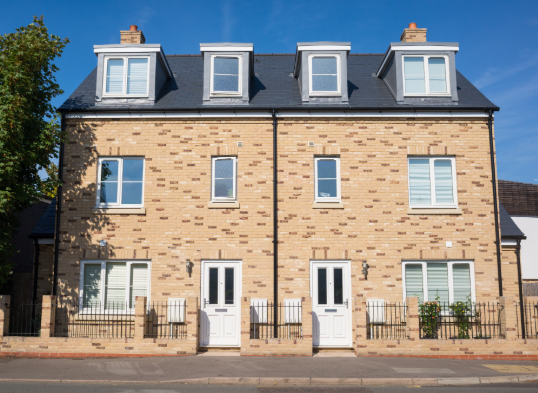
Across the UK, semi-detached houses are recording the strongest annual price growth of any residential property type in 2026. Zoopla’s July 2026 House Price Index shows the average semi-detached home at £282,100, up 1.9% year-on-year. That outperformance is consistent and not particularly quiet once you look at the data, but it has received considerably less attention than the national average figures that dominate housing market coverage.
For buyers actively targeting a semi-detached home, the pattern has direct implications for how to approach the search and what to expect when making an offer.
What the full property type picture looks like
The divergence between property types in 2026 is pronounced. Semi-detached homes are at 1.9% annual growth. Terraced houses are at 1.7%, recording an average price of £242,000. Detached houses are growing more slowly at 1.0%, with an average of £458,300, reflecting the greater sensitivity of higher-priced properties to the current mortgage rate environment. Flats and maisonettes are the sole property type in negative territory, down 1.7% to an average of £192,200.
The pattern reflects something consistent in UK housing market data: property types that sit in the most accessible price range for the broadest pool of buyers tend to perform most robustly when affordability is under pressure. The semi-detached, averaging around £282,000, sits at a price level that a wide range of buyers with different deposit sizes and incomes can reach. Its combination of private garden, typically two to three bedrooms, and often good proximity to schools and transport makes it the default target for family buyers, first movers up from flats, and buyers relocating from more expensive markets. That breadth of demand is what sustains its relative outperformance.
What the house prices page shows about the current landscape
Zoopla’s sold house price data for 2026 shows average prices across cities ranging from below £120,000 in the most affordable northern markets to above £460,000 in Cambridge. Within that range, the semi-detached has maintained its growth position across very different local conditions. In affordable markets, semi-detached prices are growing faster because demand from first and second-step buyers is sustained. In more expensive markets, the semi-detached is holding up better than the detached sector because buyers are willing to trade space for accessibility.
Zoopla’s house prices page also describes the semi-detached as the most popular type of home in the UK, which reinforces both its demand characteristics and the competitive nature of the market for well-priced examples.
What this means if you are buying a semi-detached
The 1.9% annual growth figure is an average, and within it there is significant variation by location and by the specific characteristics of individual properties. Well-presented, accurately priced semi-detached homes in areas with strong buyer demand continue to attract competitive interest and sell within reasonable timeframes even in the current slower market overall.
For buyers targeting this property type, the practical implications are worth understanding clearly. Semi-detached homes that are genuinely well located and well priced are not sitting unsold for extended periods. Preparation matters: having a mortgage in principle in place, a clear understanding of your maximum budget at current rates, and a solicitor ready to act puts you in a position to move decisively when the right property appears. In a market where almost 30% of listings since spring remain unsold, the well-priced semi-detached is the exception to that pattern, not the rule.
Talk to our team about finding your next home
This article was originally published by BriefYourMarket and is reproduced here with their permission.
For more company news and insights from Pygott & Crone, click here





Latest news

The Renters' Rights Act: What landlords need to know now
The Renters' Rights Act: What landlords need to know nowThe Renters' Rights Act 2025 came into force on 1 May 2026, bringing the most significant overhaul of private rented sector legislation in England in more than thirty years.

What's my home really worth? Understanding property valuations
What's my home really worth? Understanding property valuationsBefore you market a property for sale, understanding its value in the current market is the most important preparation you can make.

Void periods explained: How to minimise empty rental months
Void periods explained: How to minimise empty rental monthsA void period is the time between one tenancy ending and the next beginning, during which the property generates no income.

Breaking down the property chain: How it really works
Breaking down the property chain: How it really worksWhen you buy or sell a home in the UK, you are likely to hear the phrase property chain.
