
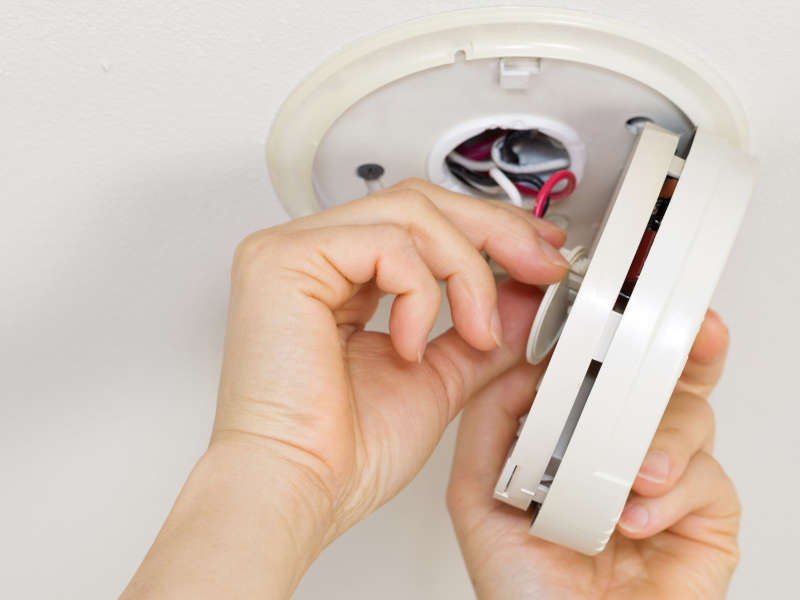

Landlords must provide carbon monoxide alarms from October
Lettings manager Mark Brayfield explains the changes in leglislation that landlords must be aware of

The regulations on smoke alarms and carbon monoxide alarms in rentals are changing in October. If you are a landlord then the following will almost certainly apply to you.
We’ve anticipated these changes for a while now, and we’ve had confirmation that the expected amendments to the existing smoke and carbon monoxide alarm legislation are going through. As of 1st October 2022 the Smoke and Carbon Monoxide Alarm (Amendment) Regulations 2022 will stipulate that a carbon monoxide (CO) alarm must be installed in a room that contains a fixed combustion applicance (other than a gas cooker).
A fixed combustion device includes gas boilers, open fires, log burners, gas heaters, gas fires (this list is not exhaustive).
With regards to smoke alarms the regulations currently stipulate that landlords must ensure a smoke alarm is equipped on each storey of the premises where there is a room used as living accommodation. The amended regulations are expanding on this and will further stipulate that if a tenant (or their representative) makes a report to the landlord that a smoke alarm (or carbon monoxide alarm) is not in proper working order, the landlord must ensure that the alarm is repaired or replaced as soon as reasonably practicable. Landlords must also continue to ensure that the alarms are working on the first day of a new tenancy.
This legislation applies to England and Wales only. If you have any queries about this then our team at Pygott & Crone are always happy to answer them. Get in touch today on 01522 518293.
For more company news and insights from Pygott & Crone, click here





Latest news

One third of properties need price reductions: How to avoid joining them
January 2026 brought a strong start to the property market.

Mortgage rates and what they mean for buyers and sellers
Mortgage rates and what they mean for buyers and sellersMortgage rates are one of the most significant factors in the UK property market, influencing how much buyers can borrow, which price brackets are accessible, and how sellers should calibrate their expectations.

What buyers are actually doing during a viewing, and why it matters
What buyers are doing during a viewing, and why it matters A viewing typically lasts thirty to forty-five minutes, and within that window a browser becomes a buyer, or does not.

Preparing for a valuation visit: What agents actually look at
Preparing for a valuation visit: What agents actually look atMost sellers tidy the house before an agent comes to value it, which is sensible enough.
