
What ten days of open doors reveal about our love of period homes
What ten days of open doors reveal about our love of period homes Heritage Open Days returns from 11 to 20 September 2026, ten days during which thousands of buildings across England open their doors to the public for free.

The festival, managed by the National Trust with support from the People’s Postcode Lottery, is the largest community-led festival of history and culture in England, drawing millions of visitors each year and relying on more than 40,000 volunteers to make it happen. Over 2,500 organisations take part.
This year’s theme is Everyday Histories: a focus on the extraordinary stories of ordinary people and the working lives that shaped local communities. The programme includes guided tours, interior openings, short talks, and walks across sites ranging from churches and factories to private gardens and bell towers. Everything is free.
What people actually do when the doors open
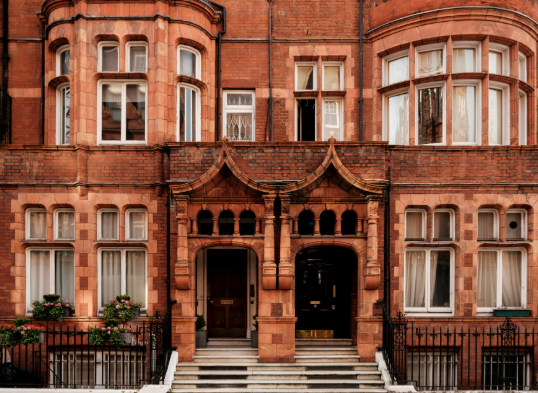
The appeal of Heritage Open Days is, at its core, an appeal to the same instinct that has always driven interest in old buildings: the desire to be inside something, to understand how it was made, to imagine the people who made it. People do not queue outside a Victorian warehouse or a Georgian terrace on a September morning because they have nothing better to do. They queue because something about those buildings asks a question that most of us find genuinely difficult to ignore.
What was it like to live here? What did these rooms feel like when they were new? Who walked up these stairs?
The festival is deliberately broad. It encompasses stately homes and industrial sites, public buildings and private houses, the grand and the entirely unremarkable. That breadth is partly what makes the attendance figures meaningful. It is not just the spectacle of a country house that draws people. It is the building itself: its age, its materials, its accumulated presence.
The connection to how we buy homes
The enthusiasm that turns out in the hundreds of thousands for Heritage Open Days reflects something real about the relationship between the British public and period buildings, and that relationship has a direct expression in the property market.
Period homes, broadly defined as properties built before the mid-twentieth century with original or retained architectural features, consistently attract a loyal and often passionate buyer audience. They are the category most likely to generate competitive interest from multiple parties, and they tend to hold their value through market cycles because the supply of them is genuinely fixed. You cannot build more Georgian terraces or Victorian villas. What exists is all that will ever exist, and the people who want them know it.
What Heritage Open Days makes visible, in the most straightforward way possible, is the depth of that attachment. Millions of people choose to spend ten days of their September in rooms they have never been allowed into before, not because those rooms are decorated to the latest specification, but because they carry something that no new building can replicate. They carry time.
September is also a good time to look
Heritage Open Days runs through the second and third weeks of September, which overlaps with the beginning of the autumn property market. It is one of the two most active selling seasons of the year. For buyers with a genuine interest in period properties, wandering through open buildings during the festival is also, informally, one of the best ways to understand what you are drawn to, what scale suits you, and which architectural details matter most in practice rather than in theory.
The queues on Heritage Open Days are not a coincidence. They are the same instinct that eventually leads someone to buy an old house.
Talk to our team about finding your next home
This article was originally published by BriefYourMarket and is reproduced here with their permission.
For more company news and insights from Pygott & Crone, click here





Latest news

The autumn deadline student tenants need on their radar
The autumn deadline student tenants need on their radar Most of the changes introduced by the Renters' Rights Act on 1 May 2026 work in tenants' favour: stronger security of tenure, no more no-fault evictions, and the freedom to leave at any point with two months' written notice.

What your landlord must do with your deposit, and by when
What your landlord must do with your deposit, and by when When you hand over a deposit at the start of a private tenancy in England or Wales, the law sets out precisely what your landlord must do with it and when.

Why first-time buyers pay wildly different stamp duty depending on where they buy
Why first-time buyers pay wildly different stamp duty depending on where they buy First-time buyers in England start from the same point on paper: a stamp duty relief threshold that means no tax is paid on the first £300,000 of a purchase price.

Three heatwaves, three dips, one resilient buyer market
Three heatwaves, three dips, one resilient buyer market The summer of 2026 tested the UK property market with an unusual combination of pressures: three separate heatwaves, a World Cup, a period of political uncertainty, and elevated mortgage rates following the conflict in Iran.
